Skip to content

Black Friday: up to 61% off our packs until November 30.

See the packs

Blog

Blog & Insights

Practical articles on building and running AI products, agents and workflows.

All articles

    • Robotics & Physical AI

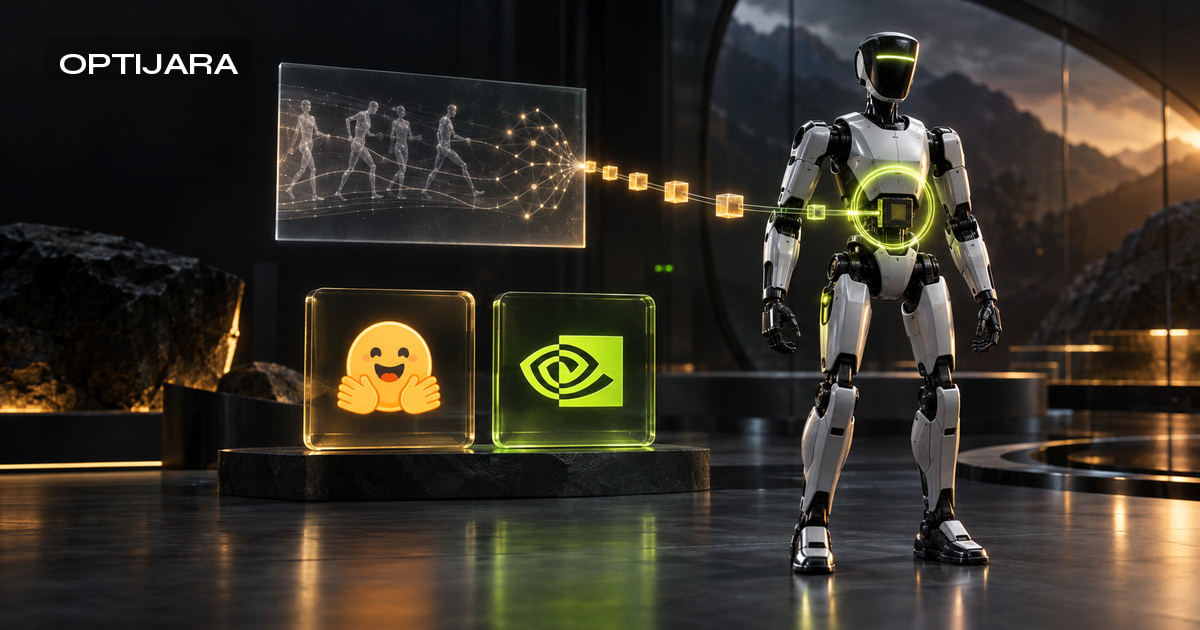
    LeRobot SONIC Humanoid Integration: Motion Tokens Are Not Motor Joints

    LeRobot's humanoid integration separates a learned task policy from onboard whole-body control on Unitree G1. Follow the SONIC motion-token interface and the 31-value versus 64-value observation mismatch that must be resolved before treating a checkpoint as compatible.
    • Robotics & Physical AI

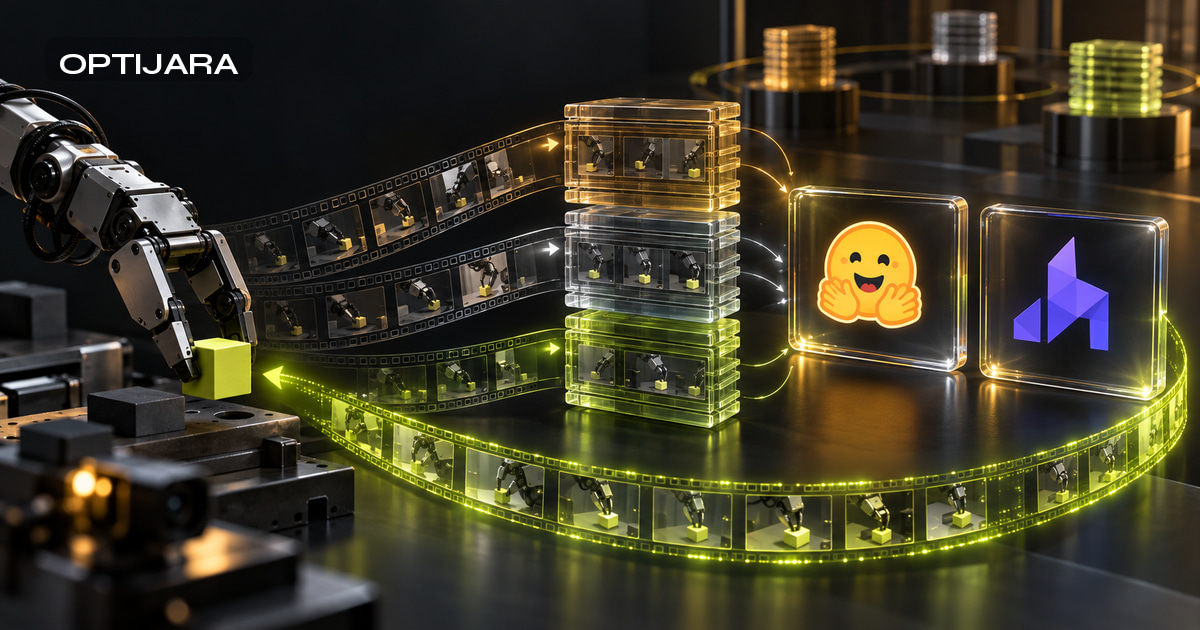
    LeRobot LanceDB Integration: A Dataset-to-Policy Handoff Map

    LeRobot's native LanceDB integration connects robot training and dataset curation through a shared storage layout. This guide explains the three native tables, migration from legacy plugin output, and the checks needed to preserve temporal examples, clean splits and meaningful performance comparisons.

    • Robotics & Physical AI

    Skild AI S1 and the Video-to-Task Evaluation Map for Long-Horizon Robotics

    Skild AI S1 makes video prompting a serious robotics evaluation topic, but a video prompt is not the same as proof of autonomous long-horizon completion. This article turns the release into a practical Video-to-Task Evaluation Map for measuring task progress, interventions, resets, recovery, and safety evidence.

    • Robotics & Physical AI

    BRIDGE Humanoid Platform: A Morphology-Control Co-Design Playbook for Physical AI Prototyping

    BRIDGE presents an open-source humanoid platform built around morphology-control co-design, but physical AI teams should treat the paper as a route to verify rather than a claim to accept. This playbook introduces Optijara's Embodiment Route Acceptance Test for checking morphology fidelity, retargeting, whole-body control, hardware-control coupling, reproducibility, licensing, safety, and benchmark reproduction before committing lab time.

    • Developer Tools
    • Robotics & Physical AI

    Anthropic Model Hardware Standard: A PDCAT Playbook for Safer AI Physical Device Control

    Anthropic's Model Hardware Standard research preview points toward shared interfaces for AI-controlled physical devices, but interoperability is not the same as operational safety. This PDCAT playbook gives teams a practical acceptance test for bounded lab and manufacturing workflows, with evidence gates, rollback, and stop-use criteria.

    • Robotics & Physical AI

    Legato VLA and the Chunk-Boundary Continuity Test for Robot Policy Smoothness

    A smooth robot demo is not enough evidence that an action-chunked VLA policy will stay continuous on a repeated route. This article turns the renewed discussion around Legato into Optijara's CBCAT framework for testing chunk boundaries, latency, smoothness, recovery, and rollout discipline.

    • Open Source
    • Robotics & Physical AI

    HiPHI Dataset Acceptance Test: How to Qualify Human Motion Data for Humanoid Robot Policy Training

    HiPHI gives robotics teams a fresh public corpus for high-precision human motion and object interaction. The operational question is not whether 617.5 released hours sounds impressive, but whether the data can pass artifact, schema, leakage, retargeting, benchmark and bounded hardware checks for a specific humanoid policy route.

Next step

Have something to build?

Tell us what you need. We reply with a clear scope and a fixed quote.