06 — Insights

Blog & Insights

Thoughts, tutorials, and deep-dives into the world of enterprise AI.
LeRobot SONIC Humanoid Integration: Motion Tokens Are Not Motor Joints
Robotics & Physical AI
Sep 26, 2026

LeRobot SONIC Humanoid Integration: Motion Tokens Are Not Motor Joints

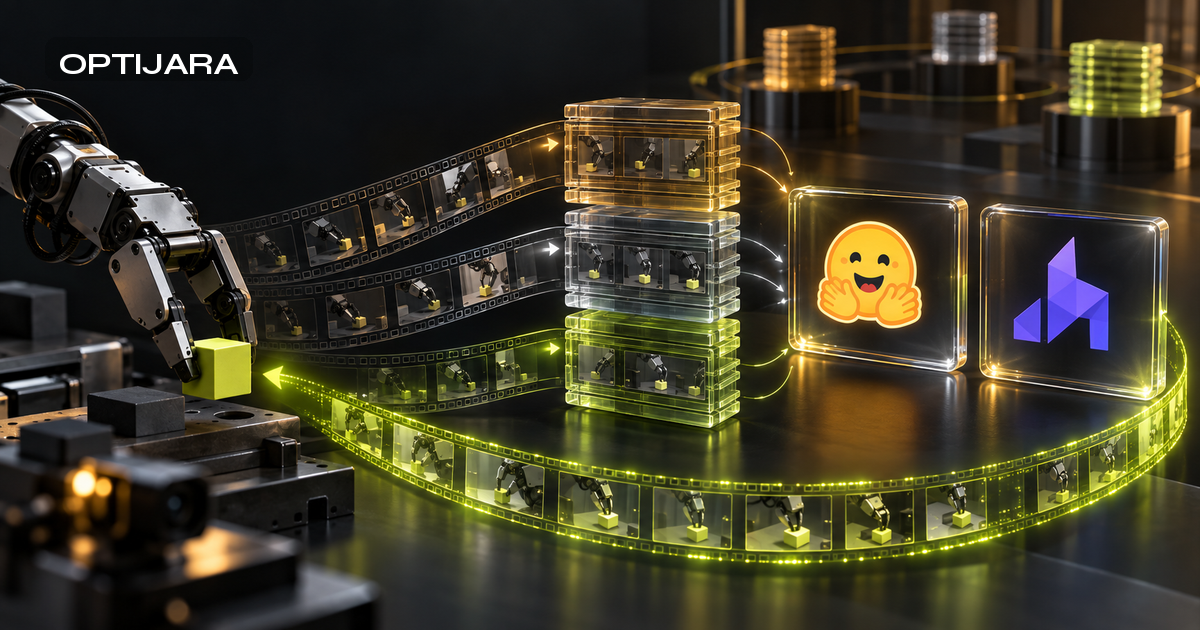
LeRobot's humanoid integration separates a learned task policy from onboard whole-body control on Unitree G1. Follow the SONIC motion-token interface and the 31-value versus 64-value observation mismatch that must be resolved before treating a checkpoint as compatible.

10 min readRead More →
LFM2.5-VL-DSpark: How to Treat Liquid AI’s Vision Drafter as a Verified Sidecar, Not a Second Model
LLM News & Models
Sep 25, 2026

LFM2.5-VL-DSpark: How to Treat Liquid AI’s Vision Drafter as a Verified Sidecar, Not a Second Model

Liquid AI’s LFM2.5-VL-DSpark release is easy to misunderstand if the small drafter artifact is treated like a second vision model. The safer path is to verify the target, sidecar, projector, runtime, hidden-state taps, cache rollback, and output parity before trusting any speedup table.

10 min readRead More →
LeRobot LanceDB Integration: A Dataset-to-Policy Handoff Map
Robotics & Physical AI
Sep 25, 2026

LeRobot LanceDB Integration: A Dataset-to-Policy Handoff Map

LeRobot's native LanceDB integration connects robot training and dataset curation through a shared storage layout. This guide explains the three native tables, migration from legacy plugin output, and the checks needed to preserve temporal examples, clean splits and meaningful performance comparisons.

10 min readRead More →
NVIDIA Nemotron 3 Diarization: The Speaker-to-Transcript Handoff Map for Overlapping Speech
AI Tools & Tricks
Sep 24, 2026

NVIDIA Nemotron 3 Diarization: The Speaker-to-Transcript Handoff Map for Overlapping Speech

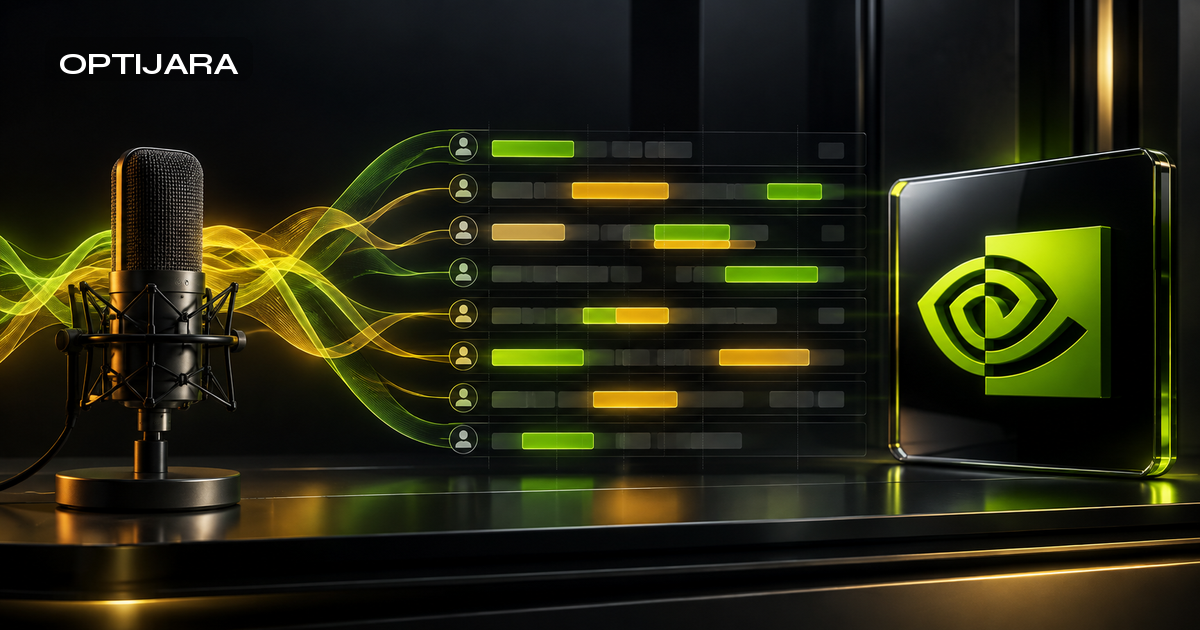
NVIDIA Nemotron 3 Diarization gives speech applications anonymous speaker activity, but it does not create a finished eight-person transcript by itself. This guide maps the handoff from diarization to ASR, overlap handling, session state, and measured transcript quality.

10 min readRead More →
Benchmark Scores Need Protocols: How Evaluation Cards and Every Eval Ever Make AI Results Comparable
Cloud & Infrastructure
Sep 23, 2026

Benchmark Scores Need Protocols: How Evaluation Cards and Every Eval Ever Make AI Results Comparable

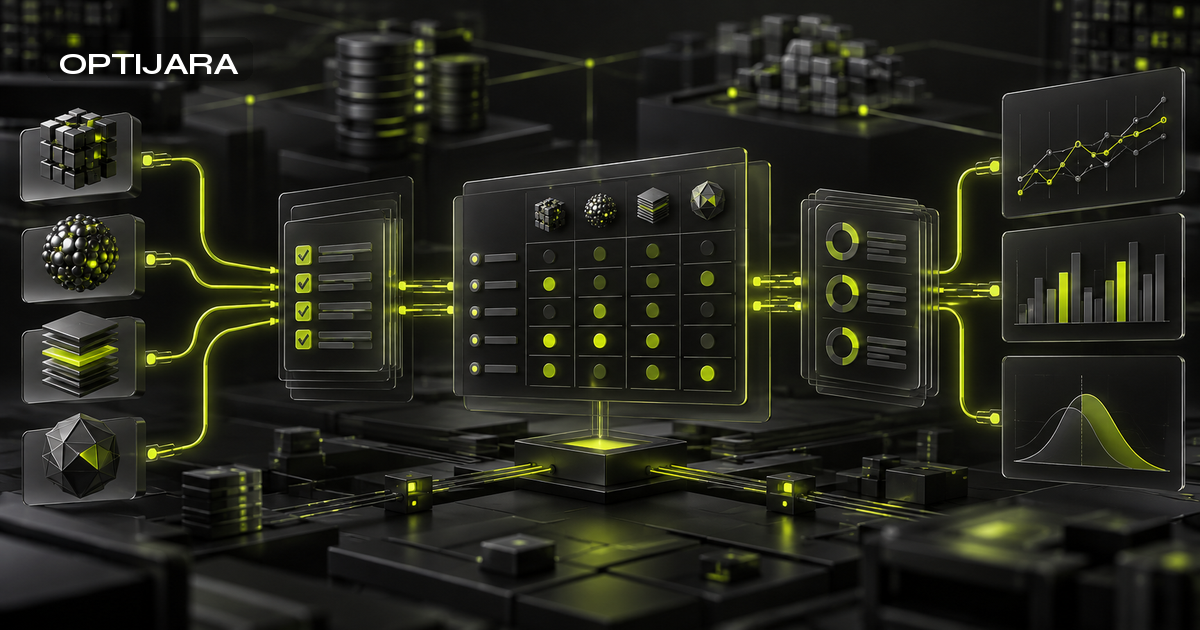
UK AISI and EvalEval's September 22 release points to a more useful way to read AI benchmarks: join the score to the protocol before comparing models. This guide explains how Evaluation Cards, Every Eval Ever, and public inference-scaling records can support traceable comparison without pretending that schema validation makes experiments equivalent.

10 min readRead More →
Transformers GGUF llama.cpp Quants: How to Verify the Packed Path on Apple Silicon
Open Source
Sep 22, 2026

Transformers GGUF llama.cpp Quants: How to Verify the Packed Path on Apple Silicon

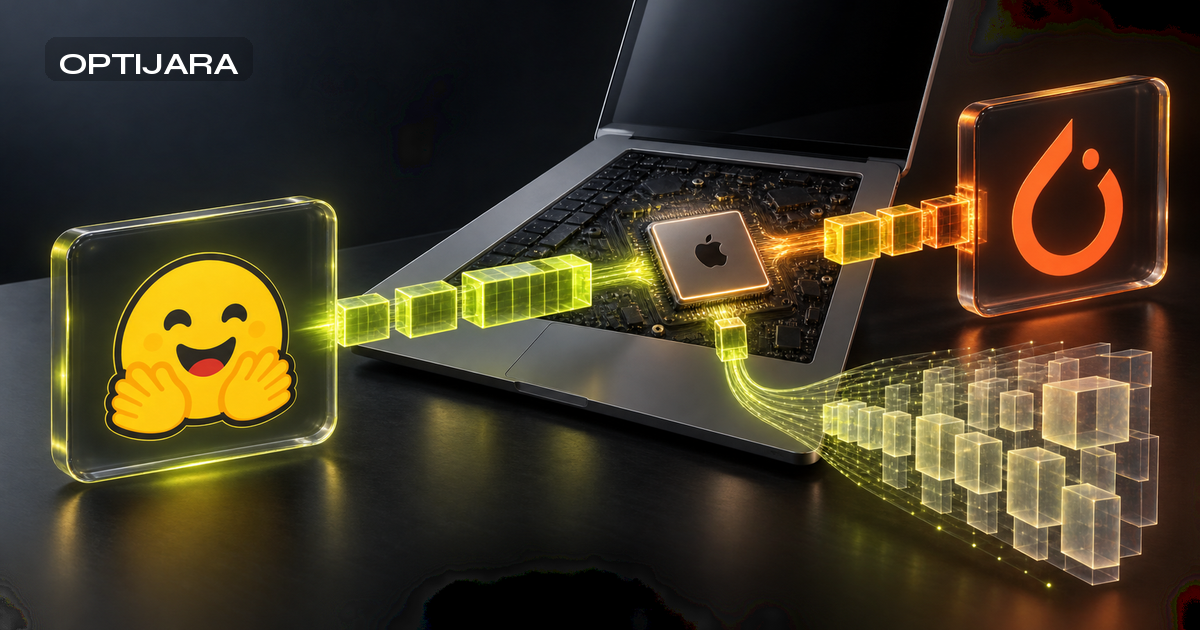
Hugging Face Transformers can now use llama.cpp-style GGUF quants through ggml Metal kernels on Apple Silicon, but a successful load is not proof of packed execution. This guide gives operators a practical verification map for separating packed GGUF paths from dequantization and attention fallbacks.

10 min readRead More →
Hugging Face tokenizers v1: The Same-IDs Migration Matrix
Developer Tools
Sep 21, 2026

Hugging Face tokenizers v1: The Same-IDs Migration Matrix

Evaluate Hugging Face tokenizers v1 with a Same-IDs Migration Matrix that separates token-ID parity, auxiliary outputs, cache behavior, and Rust performance from application latency.

10 min readRead More →
Optimum Intel 2.2 and OpenVINO GenAI 2026.4: An Encode-to-Decode Timing Map for Multimodal Inference
Cloud & Infrastructure
Sep 20, 2026

Optimum Intel 2.2 and OpenVINO GenAI 2026.4: An Encode-to-Decode Timing Map for Multimodal Inference

Optimum Intel 2.2 and OpenVINO GenAI 2026.4 are most useful when treated as an observability upgrade, not a blind performance upgrade. This guide maps export, quantization, runtime, encoding, prefill, decode, batching, and Qwen3-Omni placement into a practical operator framework.

10 min readRead More →
Ternary Bonsai 2 27B: WebGPU vs Native Runtime Parity for Local AI Inference
Open Source
Sep 20, 2026

Ternary Bonsai 2 27B: WebGPU vs Native Runtime Parity for Local AI Inference

Ternary Bonsai 2 27B puts a 27B-class ternary checkpoint into both browser WebGPU and native runtime conversations. This guide maps what teams should compare across cold load, warm load, compilation, prefill, decode, features, cache behavior, and reproducibility before choosing WebGPU, MLX, or CUDA.

10 min readRead More →

Stay Updated

Get the latest insights on AI implementation and MENA tech trends.